
 EN


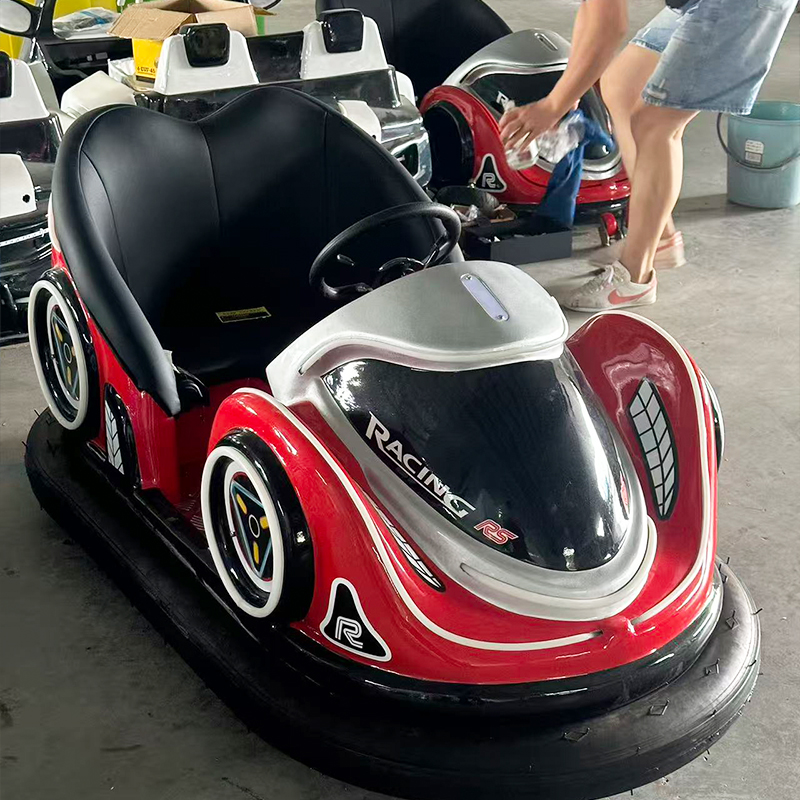
A mini bumper car presents a unique engineering challenge when it comes to collision safety. As ride operators and amusement park managers reduce the overall body dimensions to accommodate younger riders and smaller venue spaces, the structural dynamics and protective capabilities of these vehicles change fundamentally. Understanding how reduced body size affects collision performance is critical for manufacturers, venue operators, and safety professionals who must balance passenger protection with operational efficiency.
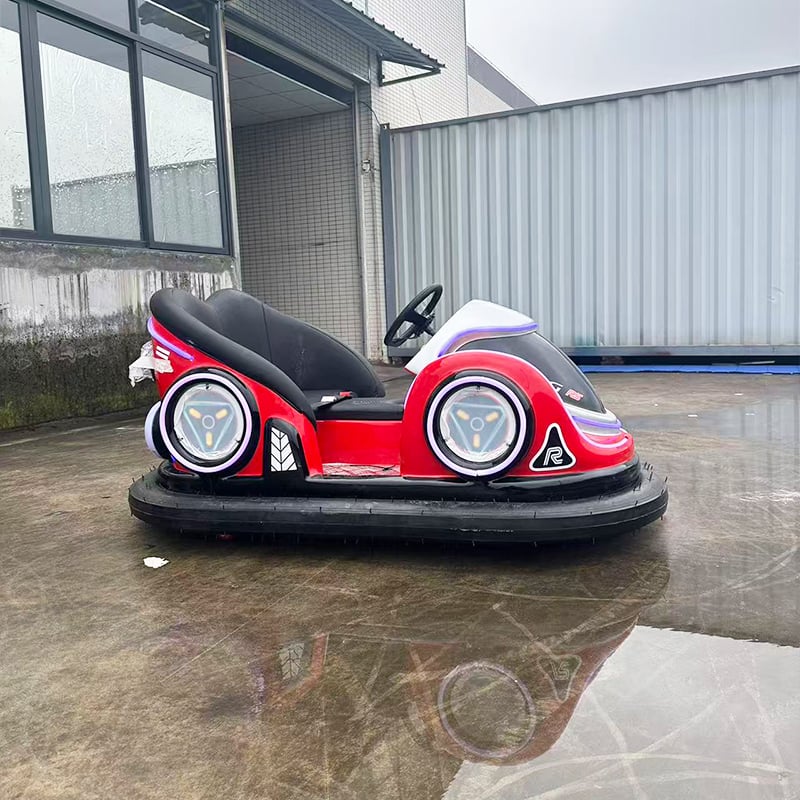
The relationship between vehicle size and collision safety cannot be viewed through a single lens. A compact bumper car experiences forces and stress distributions differently than full-size models, requiring deliberate design choices in materials, frame geometry, padding placement, and energy absorption systems. This article explores the technical realities of how reduced body size reshapes collision behavior, the engineering strategies used to maintain or enhance safety, and the practical implications for different ride environments.
How Reduced Size Alters Collision Dynamics
Mass and Force Distribution in Smaller Frames
When a small bumper car collides with another vehicle or barrier, the concentrated mass and reduced surface area change how impact forces distribute across the structure. A kids bumper car with lower total mass experiences lower absolute impact energy compared to adult-sized versions at equivalent speeds, which can seem advantageous at first. However, the force-per-unit-area actually increases because the same collision energy concentrates across a smaller footprint. This means stress points in the frame must absorb proportionally higher localized pressures, demanding stronger materials and more strategic reinforcement in critical zones.
The reduced wheelbase and track width of a compact bumper car also affect rotational behavior during contact. Because the distance between wheels is smaller, the vehicle's moment arm changes, causing different rotational acceleration patterns than larger models. Operators and riders in a small bumper car may experience different yaw and roll characteristics after impact, which influences overall safety perception and actual occupant stress distribution.
Momentum and Deceleration Rates
A kids bumper car traveling at the same speed as a standard bumper car carries less total momentum due to lower mass. During a head-on collision, this reduced momentum results in lower total energy that must be dissipated. However, the deceleration rate—how quickly the vehicle comes to rest—depends on both collision force and vehicle stiffness. A compact bumper car with a stiffer frame may decelerate faster than a larger, more flexible model, potentially exposing occupants to sharper acceleration spikes rather than gradual cushioning. This trade-off between mass reduction and structural stiffness becomes a critical design parameter for manufacturers of compact bumper cars.
Engineering Solutions for Collision Safety in Compact Models
Advanced Material Selection and Frame Design
Manufacturers of small bumper car models have adopted high-strength composites, reinforced fiberglass, and strategic steel reinforcement to compensate for the reduced overall size. These materials provide better strength-to-weight ratios, allowing a compact bumper car to maintain structural integrity during collisions without adding excessive mass. The frame geometry itself becomes more critical; load paths must be engineered to direct impact forces through the strongest sections of the frame rather than dispersing them across weaker zones.
In mini bumper car designs, the bumper perimeter itself plays a larger role as a primary load-bearing element. By extending the bumper structure deeper into the frame and using graduated thickness profiles, engineers can improve energy absorption without significantly increasing vehicle weight. This approach is particularly important for kids bumper car models, where passenger size is smaller and the vehicle must maintain proportional dimensions while not sacrificing safety margins.
Padding, Restraints, and Occupant Protection
The reduced interior dimensions of a compact bumper car require careful placement of padding and cushioning materials. With less space between the occupant and the outer shell, crash padding must be thicker and more strategically positioned to maintain effective deceleration distances. Modern small bumper car models incorporate energy-absorbing foam in targeted zones—particularly at head level, around the torso, and at the feet—to manage the impact energy that reaches passengers.
Restraint systems in a kids bumper car must also adapt to smaller body sizes and seating configurations. Lap bars, safety belts, and containment structures are scaled proportionally, but the force vectors they handle during a collision remain consistent with larger models. This means restraint engineering becomes proportionally more critical in compact designs, where structural support and restraint coordination directly influence whether occupants experience contained, controlled deceleration or uncontrolled secondary impacts against the vehicle interior.
Practical Safety Implications for Venue Operations
Speed Management and Collision Scenario Control
A small bumper car operating environment typically limits vehicle speed to levels compatible with the riders' ages and experience levels. This operational constraint fundamentally changes collision severity profiles compared to adult-oriented rides. Because speed is lower for kids bumper car attractions, the total kinetic energy at impact is significantly reduced, effectively offsetting some of the disadvantages posed by reduced vehicle size. Venue operators must understand this relationship: a properly maintained mini bumper car at design-specified speeds can achieve equivalent or better safety outcomes than larger vehicles operating at higher velocities.
The arena size and barrier design also interact with compact bumper car collision dynamics. Smaller arenas with closer barriers mean more frequent, lower-angle collisions rather than head-on impacts. This collision distribution actually favors designs with efficient side-impact absorption, which is achievable in compact bumper car frames because the entire perimeter can be engineered as a cohesive impact boundary without the geometric compromises required in larger vehicles.
Maintenance and Long-Term Structural Integrity
Reduced size also means less margin for material degradation before structural compromise becomes a safety issue. A mini bumper car frame with microfractures or composite delamination can fail faster than larger, more over-engineered models because the safety factor margin is tighter. This demands more rigorous inspection schedules, documented maintenance protocols, and proactive component replacement cycles. Operators of kids bumper car attractions must prioritize regular structural assessments, checking for cumulative damage in high-stress zones where impact forces concentrate in compact designs.
The smaller surface area of a compact bumper car also means that corrosion, UV degradation, or impact scarring can reach critical thresholds more quickly in terms of structural performance. Protective coatings, routine cleaning, and environmental controls become more important operational considerations for maintaining the safety envelope of small bumper car models over their service lifetime.
FAQ
Is a mini bumper car less safe than a standard-sized bumper car?
Not necessarily. While a mini bumper car does experience different collision dynamics due to reduced size, modern engineering solutions—including advanced materials, optimized frame design, and scaled padding systems—can achieve equivalent or superior safety outcomes. The key difference is that mini bumper car safety depends heavily on speed limits, arena design, and maintenance rigor. When operated within design specifications, a small bumper car can be as safe as larger models.
Why is a kids bumper car designed with specific size constraints?
A kids bumper car is designed to proportional specifications primarily for ergonomic fit, visibility, and rider experience. However, these size choices also influence how collision forces are managed and distributed. Smaller dimensions affect the vehicle's rotational behavior, internal impact zones, and how occupants experience deceleration. Manufacturers of kids bumper car models optimize dimensions not only for comfort but also to align collision dynamics with age-appropriate safety margins and protective systems.
How does a compact bumper car's smaller mass affect safety during collisions?
Lower mass in a compact bumper car means less total kinetic energy at a given speed, which reduces the absolute force magnitude during collision. However, this force concentrates across a smaller surface area, increasing localized stress density. The net safety effect depends on frame stiffness, material strength, energy absorption design, and operational speed limits. In practice, a small bumper car's lighter mass is often advantageous because venues can limit speeds appropriately while still delivering an engaging ride experience without severe collision forces.